Bath Towels That Stay Soft: Weight, Weave, and Washing
GSM, staple length, and one laundry habit decide whether a towel stays plush or turns to sandpaper. The measurable specs and the wash routine that revives old towels.
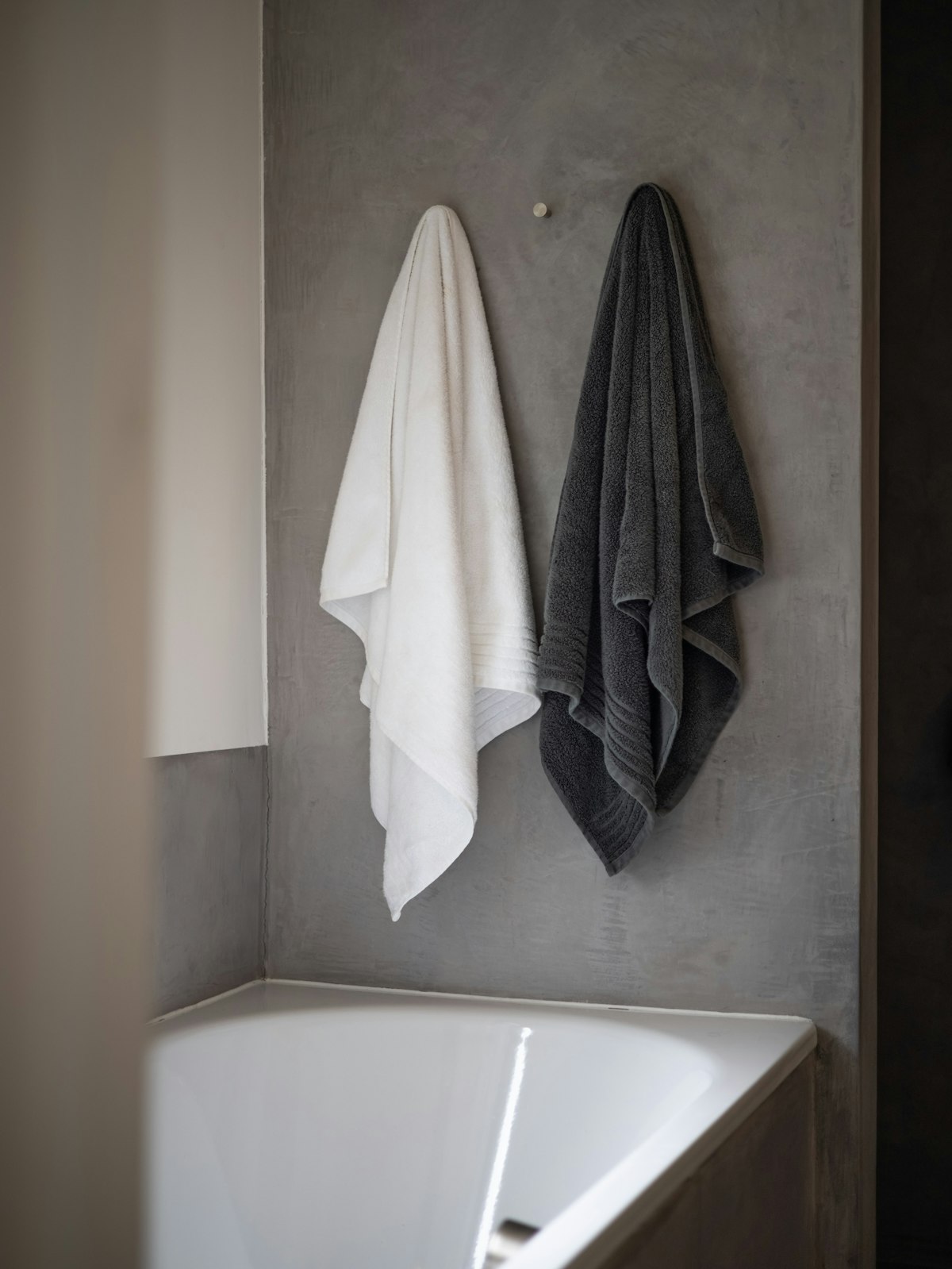
Everyone has owned the same disappointing towel. It was magnificent in the shop — thick, cloudlike, promising. Six months later it feels like sandpaper's cousin, pushes water around instead of absorbing it, and smells faintly of mildew no matter what you do. The towel did not betray you. Between the GSM arms race, the wrong wash routine, and a fabric-softener habit that quietly waterproofs cotton, most towels are set up to fail.
The good news: towel quality is one of the most measurable things in home textiles. Weight, fiber, and weave predict performance better than brand names do, and the care rules that keep a good towel good are short and learnable.
Here is what the numbers mean, which construction suits which bathroom, and the laundry changes that revive towels you already own.
The short version
For most households, the sweet spot is a long-staple cotton towel at 600–800 GSM with a dense terry loop pile. Below 400 GSM towels feel thin and wear fast; above 900 GSM they absorb impressively but take forever to dry — a mildew risk in humid bathrooms. Choose terry loops for absorbency, a woven (non-velour) face for durability, and skip fabric softener forever: it coats fibers with a waxy layer that destroys absorbency wash by wash. Wash towels separately, in warm water, with half the detergent you think you need, and dry them completely every time.
What to look for
- GSM (grams per square meter): 300–400 = thin, fast-drying gym/ guest towels. 400–600 = everyday balance. 600–800 = plush, absorbent bath towels. 800–900+ = luxury weight; only choose if your bathroom is well-ventilated and your dryer is strong.
- Fiber length: "Long-staple" or "extra-long staple" cotton (including Turkish and Egyptian labeled lines) uses longer fibers that pill less, stay smoother, and survive more washes. Short-staple cotton feels fine initially and roughens fastest.
- Weave and pile: Terry cloth (looped pile on both sides) is the absorbency standard. Higher, denser loops = more surface area = more water held. Velour (sheared loops on one face) looks velvety and photographs well but absorbs less. Waffle weave absorbs less per square inch but dries fastest — ideal for hand towels and humid climates.
- Construction details: Double-stitched hems resist the edge fraying that kills towels first. A decorative dobby border is fine; avoid towels where the border is much denser than the pile, which causes the classic curl-after-washing.
- Size honesty: A standard bath towel is about 27×52 inches; a bath sheet is 35×60 or larger. Tall people and dedicated bath-takers should default to bath sheets for body towels — it is a bigger quality-of-life upgrade than a GSM bump.
- Colorfastness: Deeply dyed towels shed dye for the first several washes. Wash new towels separately, twice, before first use — this also strips the factory softener coating that makes new towels feel silky and absorb nothing.
Matching towel to bathroom
The steamy family bathroom (two showers a day, door always closed): mid-weight wins. 500–650 GSM towels dry fully between uses; ultra-plush 900 GSM towels in this room are mildew farms. Add a heated rail or an extra hook so towels hang fully open, not bunched — hanging matters as much as the towel.
The guest bathroom: This is where the plush towel shines — used rarely, dried in a big airy room, and judged by first impression. 700–800 GSM, brightest white or a deep color, washed before guests arrive.
The small rental bathroom with a weak dryer: Waffle-weave or 400–500 GSM terry. Fast-drying beats plush when laundry infrastructure is limited — the same logic as fast-drying cotton picks elsewhere in the house, like the throws in our throw blankets comparison.
Hand and face towels: Replace face towels more often and choose smoother, lower-pile weaves that are gentler and dry between uses. Dedicate colors by person in shared bathrooms; it prevents disputes and uneven wear.
Super-Plush Bath Towels
Long-staple cotton towels at a published 820 GSM — the plush guest-bathroom and everyday-luxury pick for bathrooms with ventilation to dry them.
- 820 GSM long-staple cotton terry
- Dense loop pile for absorbency
- Spa-style dobby border finish
- + Genuinely plush with published specifications
- + Absorbency holds up under the no-softener routine
- + Bath sheet sizing available
- – Heavy weight dries slowly in steamy bathrooms
- – Premium pricing per towel
Premium Turkish Cotton Bath Towels (4-Pack)
Turkish long-staple cotton towels in the everyday 600 GSM class, sold in multi-packs that make a full household rotation affordable.
- Long-staple Turkish cotton terry
- Around 600 GSM everyday weight
- Double-stitched hems
- + Dries fully between daily uses
- + Four-pack pricing suits family bathrooms
- + Softness survives frequent washing per owner feedback
- – Sheds lint for the first several washes
- – Less luxurious hand-feel than 800 GSM towels
Luxury Bath Towels (4-Pack)
Oversized Turkish cotton bath towels with a plush pile at a mid-range price — the value route to a bath-sheet feel for taller users.
- Oversized 27x54 inch bath towel format
- Long-staple Turkish cotton
- OEKO-TEX certified materials
- + Generous size at a multi-pack price
- + Plush without extreme drying time
- + Wide color selection
- – New towels need several washes to reach full absorbency
- – Heavier when wet than mid-weight rivals
The wash routine that keeps towels soft
Most towel decline is laundry-inflicted, and most of it is reversible for a few washes before the damage sets:
- Half the detergent. Excess detergent builds up in dense pile and stiffens it. Towels rinse poorly compared to clothing; use less, add an extra rinse if your machine offers one.
- No fabric softener, ever. Softener and dryer sheets deposit a hydrophobic coating — literally anti-absorbency. Use half a cup of white vinegar in the rinse cycle occasionally instead; it strips residue and neutralizes odors.
- Warm water, separate loads. Towels shed lint onto everything else and need room to agitate. Warm (not hot) preserves dyes and fibers while cleaning oils from skin and hair products.
- Dry completely, shake first. Shake each towel out before the dryer to open the loops, use dryer balls to keep pile fluffy, and never fold a towel that is even slightly damp — that is where the sour smell is born.
- The reset wash. For towels already gone stiff or smelly: one hot wash with a cup of vinegar, no detergent, then a second hot wash with half a cup of baking soda. This strip-wash, done twice a year, restores most of the absorbency people assume is gone forever.
If a towel still repels water after a strip wash, the fibers themselves are damaged or coated beyond rescue. Demote it to the rag bin — and let its replacement start life with the right routine.
FAQ
Turkish vs. Egyptian cotton — does it matter?
Both labels describe long-staple cottons with excellent reputations, and both are also used loosely in marketing. The reliable signal is the combination: long-staple fiber + a GSM in the 600–800 range + dense loop construction from a brand that publishes all three. A towel that hides its GSM is telling you something.
How many towels should a household own?
Two body towels and two hand towels per person, plus a guest set, is the rotation that lets every towel dry fully and rest between uses. Towels washed after every use wear out two to three times faster than towels rotated every two to three days — rotation is the cheapest lifespan upgrade available.
Why do my white towels go grey-yellow?
Usually body oils and detergent residue building in the pile, aggravated by hard water. The strip wash above handles most cases. Keep whites as their own load, and avoid chlorine bleach as a routine — it weakens cotton fibers and accelerates the yellowing it is meant to fix. Oxygen-based whiteners are the gentler tool.
When is a towel actually done?
When the loops are crushed flat and no longer spring back after the reset wash, when hems unravel, or when absorbency stays poor after stripping. Quality long-staple towels commonly serve 3–5 years of family use; budget short-staple towels often fade within 18 months. Cost per year usually favors buying the better towel once.