Floor Lamps vs. Table Lamps: Lighting a Room Without Ceiling Lights
One interrogation-grade ceiling light — or none at all. Comparing floor and table lamps by surface, outlet, and job, plus the placement rules that rescue either.
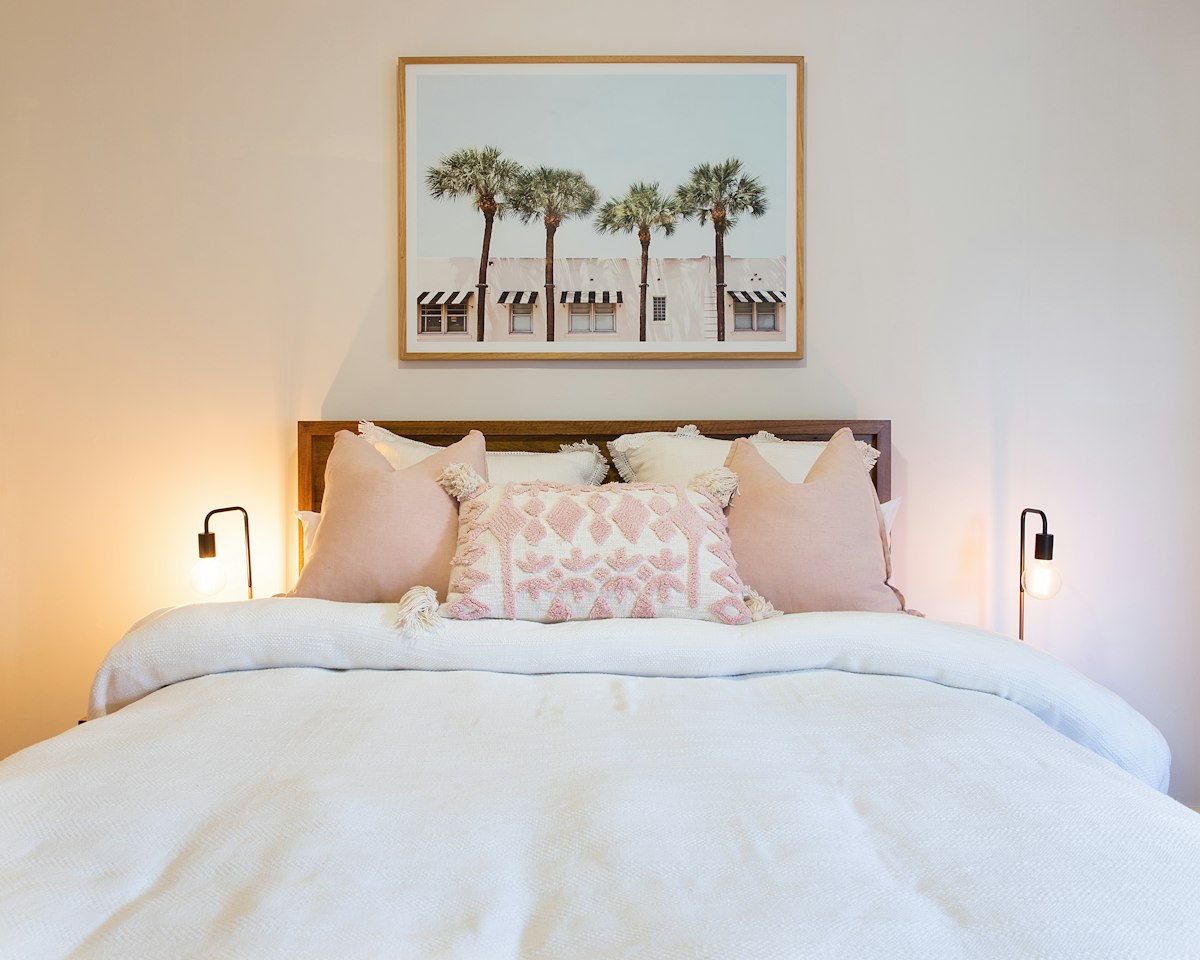
Renters know this room: one ceiling light, controlled by a switch by the door, with the emotional range of an interrogation lamp. Or the older house where the living room has no overhead fixture at all — just a switched outlet and a prayer. Either way, the question arrives quickly: floor lamp or table lamps?
Both work. They fail differently, though. A floor lamp in the wrong corner is a tall, expensive pole of regret, and a table lamp with nowhere to sit is a cord looking for a home. The right answer depends on where your surfaces are, where your outlets hide, and whether the light's job is reading, glowing, or rescuing the whole room.
Here's the comparison, plus the placement rules that make either choice light a room like it was designed that way.
The short version
If you have side tables, choose table lamps — they put light at seated eye level, which is the most flattering and useful height in a room, and they cost less per lamp. If you lack surfaces or need to light a dark corner or a reading chair, choose a floor lamp; an arc or torchiere style can also bounce ambient light off the ceiling, doing the overhead fixture's job. Most well-lit rooms end up with both: a floor lamp anchoring one corner, table lamps balancing the rest. Budget for bulbs and shades as part of the purchase — they change everything.
What to look for
- Light at the right height. For reading and conversation, the bottom of the shade should sit near seated eye level — roughly 40–48 inches from the floor. Table lamps on standard 24–28-inch side tables land there naturally; floor lamps should be chosen with shade height in mind, not just total height.
- Shade direction. Downward-facing shades (most table lamps) pool light for tasks. Upward-facing torchieres bounce light off the ceiling for ambient glow but are weak for reading. Arc lamps split the difference, delivering light from above without a ceiling fixture.
- Bulb temperature of 2700–3000K for living spaces. This is the warm range that makes rooms feel like evenings instead of offices. Buy all bulbs in the same temperature — mismatched bulbs make a room feel subtly wrong.
- A dimmer or three-way option. Single-brightness lamps force a choice between mood and function. Dimming extends one lamp across both jobs.
- Cord reality. Every lamp needs an outlet within cord's reach or a planned, covered cord path. Map outlets before falling in love — especially for floor lamps in room corners, where our small living room layout guide can help rearrange the plan around the plug.
Sky LED Torchiere Floor Lamp
A bright LED uplight that bounces light off the ceiling to do the missing overhead fixture's job — the rental rescue lamp, with a dimmer for winding down in the evening.
- Upward-facing ambient light
- Built-in dimmable LED
- Weighted base for stability
- + Lights a whole room from one corner
- + No bulbs to replace
- – Ambient only — pair with a task lamp for reading
- – Modern look won't suit every room
NOT Floor Uplight
The famously cheap uplight: a simple bowl shade on a pole that throws soft light at the ceiling. Buy two and most rooms are ambiently solved for less than a pizza night.
- Upward ambient light
- Takes standard E26 bulbs
- Assembles in minutes
- + Costs almost nothing
- + Disappears visually in a corner
- – Basic build and switch
- – Bulb sold separately
ÅRSTID Table Lamp
A classic pleated-shade table lamp that puts warm light at seated eye level beside a sofa or bed — the balanced, traditional counterweight to a floor lamp's glow.
- Fabric shade softens light
- Standard E26 socket for bulb choice
- Sturdy metal base
- + Timeless look suits most rooms
- + Perfect sofa-side height on standard tables
- – Shade needs dusting
- – On/off switch only — add a smart bulb or plug dimmer
Head-to-head: floor lamps vs. table lamps
| Factor | Floor lamp | Table lamp |
|---|---|---|
| Needs furniture | No — stands alone | Yes — needs a table or shelf |
| Best job | Corner light, reading chairs, ambient bounce | Seated task light, symmetrical pairs |
| Light height | Shade typically 55–65 in. (torchiere) or adjustable | Shade lands near seated eye level |
| Footprint | 10–14 in. base; arc styles need swing room | Zero floor space; uses table surface |
| Cost to light a room | One lamp can anchor a corner | Usually need two for balance |
| Kid/pet stability | Tall ones can tip — weight matters | Stable, but cords tempt toddlers |
| Style impact | Sculptural; fills vertical space | Smaller accent; pairs create symmetry |
The pattern most rooms settle into: floor lamp where there's no table (behind the reading chair, in the dead corner), table lamps where surfaces exist (beside the sofa, on a console). A classic combination is an arched floor lamp over a reading chair — such as the accent chairs in our buying guide — plus one table lamp across the room to balance the brightness so one side doesn't glow while the other sulks.
Placement rules that rescue any lamp
- Light in layers. Aim for light sources at different heights — one tall, one or two at table height — rather than several at the same level. Layers are why some rooms feel "designed" and others feel like waiting areas.
- Shade bottoms near eye level when seated prevents both glare (shade too high, bare bulb visible) and the cave effect (shade too low, light trapped in a pool).
- Don't exile lamps to corners only. A lamp beside the sofa where people actually sit will be used ten times more than the one brightening an empty corner.
- Mind the bulb's view. If you can see the bare bulb from the main seats, the shade is too short or too high. Longer shades or a repositioned lamp fix it; squinting is not a lighting plan.
Rental rescue kit: one torchiere floor lamp for ambient bounce, one table lamp for the sofa side, both on plug-in dimmers, all bulbs 2700K. Three purchases, no electrician, and the interrogation-room ceiling light can retire to "only when cleaning."
FAQ
How many lamps does a living room need?
A common rule is three sources of light beyond (or instead of) the overhead: typically a mix such as one floor lamp and two table lamps, or an arc lamp plus a pair. Small rooms can manage with two if one provides ambient bounce and the other covers the main seat.
Are floor lamps or table lamps better for reading?
Both work if the shade bottom sits near seated eye level and the light falls over your shoulder onto the page. Floor lamps designed for reading (with an adjustable or downward shade beside the chair) are the most convenient; table lamps work when the side table is close to the chair.
What wattage or brightness should living room lamps have?
Think in lumens: around 450–800 lumens per lamp (roughly a 40–60W incandescent equivalent) suits most living-room lamps, with the room's total ambient light around 1,500–3,000 lumens depending on size and wall color. Dimmable bulbs let one lamp cover the whole range.
Can a floor lamp replace a ceiling light?
Largely, yes — a torchiere or uplight floor lamp with a bright bulb (1,500+ lumens) bounces enough light off a standard ceiling to serve as the room's ambient source, especially paired with one task lamp. Low or dark ceilings reduce the bounce effect; in those rooms, spread two lamps instead of relying on one.